


0102030405
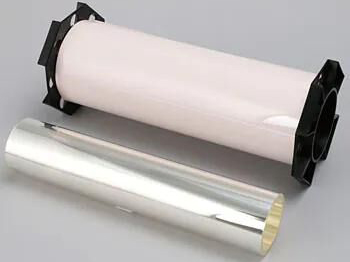



China Mono Sheet Medium Pressure Measurement Film HS - 270mm x 10m - Top Suppliers & Factory
Product List
Product Code High Pressure (HS)
Dimensions Width 270mm × Length 10m
Pressure Range 50 - 130 Mpa
Type Mono-sheet
Applications
Pressure Measurement Film is widely used in the areas of:
- Electronics circuits and LCD manufacturing
- Semiconductor fabrication
- Automotive parts testing
- Lithium-ion battery manufacturing
- Installation and alignment of mechanical equipment
Product Features
- Precise Measurement: Accurately measures pressure levels, pressure distribution patterns, and overall pressure balance.
- Visual Data Conversion: Displays contact pressure through differing color concentrations, which can be converted into exact numerical values via calculations.
- Rapid Results: Offers quick measurement capabilities, providing a clear and highly visual representation of contact pressure.
Product Specification
| Item | MS Film | PET Protection Film |
|---|---|---|
| Package | Black poly bag | Inside the roller |
| Winding Direction | Coating on inner side | No coating |
| Film Color | Cream white (light pink) | Transparent |
| Thickness | 105 ± 10µm | 75µm |
| Precision | ±10% or less (measured by densitometer at 23℃, 65% RH) | |
| Recommended Temperature | 20℃ - 35℃ | |
| Recommended Humidity | 35% RH - 80% RH | |
Product Structure & Working Principle
(1) Structure

(2) How It Works
Upon the application of pressure, the microcapsules embedded in the film break. This releases color-forming materials that react with color-developing agents, producing a red color output. The extent of microcapsule breakage is directly proportional to the applied pressure: greater pressure breaks more microcapsules, resulting in a higher color density, whereas lower pressure yields a lower color density.
Storage Instructions
Environmental Protection: Avoid direct sunlight and fire sources. For long-term storage, keep the room temperature below 15℃ and away from sunlight. Return unused L and K films to their original packaging bags (L film in black poly bag, K film in blue poly bag) and store them inside the packaging box.
Chemical & Material Avoidance: Prevent the film from coming into contact with carbonless copying paper, water, oil, solvents, other chemicals, plasticizers, plastic products containing plasticizers, rubber, erasers, and oily handwriting.
Post-Indication Storage (K Film): Once the K film has indicated color, store it inside a paper bag. If storing multiple K films together, ensure their color-indicated surfaces do not touch each other. It is recommended to separate them using white paper.
Data Preservation: The color intensity on the film samples will fade over time. It is highly recommended to scan the film images for digital storage.
Frequently Asked Questions (FAQ)
What is the pressure range of this specific Pressure Measurement Film?
This High Pressure (HS) film is designed to measure pressure levels within the range of 50 to 130 Mpa.
How does the film display different levels of pressure?
The film contains microcapsules that break under pressure. The color-forming and color-developing materials react to turn red. Higher pressure breaks more microcapsules, creating a darker red color density, while lower pressure yields a lighter density.
What are the recommended environmental conditions for using this film?
For optimal precision, the recommended operating temperature is between 20℃ and 35℃, and the recommended relative humidity is between 35% RH and 80% RH.
How should I store unused pressure measurement films?
Unused films must be stored below 15℃ for long-term storage, away from direct sunlight and fire. Always return unused L film to its original black poly bag and K film to its blue poly bag, keeping them inside the packaging box.
Will the color-indicated film fade over time?
Yes, the color on the developed film samples will fade gradually over time. It is highly recommended to scan the color-indicated film to preserve the data digitally.
What materials should not touch the film during storage?
Avoid contact with carbonless copying paper, water, oil, chemical solvents, plasticizers, plastic products, rubber, erasers, and oily handwriting, as these can damage or interfere with the film's chemical coating.